Showing posts with label event. Show all posts

Friday, May 10, 2013

Gofuku no Hi

Gofuku no Hi is May 29th. It is derived from the date May 29th: 5-2-9 is go-fu-ku, gofuku also means traditional clothing. Because of the pronunciation, May 29th was made into an excuse to enjoy wearing kimono! Along with word of mouth, there is a Japanese Facebook event page promoting Gofuku no Hi call "I wear kimono on May 29th" or "529 Kimono Kimasu". Here is a translation of the event from their page:

Who can participate:
- Any kimono enthusiasts
- Young and old, amateur and expert, everybody!

Event:
- Wear kimono on May 29th
- No specific type of kimono, how it's worn, location, or time
- You do not have to make up a special reason to go out in a special kimono. Just go about your regular day.

If it is alright to do so, go to school or work in kimono, or perhaps go to lunch, relax, go shopping, any sort of meeting, event, after work, during family time, a get-together, or just wander aimlessly to buy chips and a soda from the convenience store. There are various opportunities to wear kimono.

*There is no specific plan to gather at a specific place for this event. You can share your Gofuku no Hi accomplishment on your own personal blogs, HP, SNS, forums, or other online sites.
Please share with your family and friends!

* Advertising of Gofuku no Hi is partially word of mouth, and partially through promotion by the participants.


What a wonderful excuse to wear kimono just for fun! Let's enjoy wearing kimono how you like on 529, Gofuku no Hi!

FB event listing: https://www.facebook.com/events/476950189043292/


Monday, October 22, 2012

Upcoming Events

Summer festivals have long since ended, and many of us have returned to school. While there are fewer festivals now than during the summertime, there are still many events coming up soon, and I will continue to monitor exciting opportunities to enjoy wearing kimono or Japanese culture. Here are some upcoming events:

Taiko Workshop
Northwest Taiko @ Seattle Cherry Blossom Fest 2010
Learn basic taiko drumming with Northwest Taiko. 

When:
Wednesday, October 24th (7 - 9pm)

Where:
Japanese Cultural & Community Center of Washington
1414 S. Weller Street 
Seattle, WA 98144

Cost:
$15, $10 for JCCCW members, $5 for students
limited to 12 students, register here. 


An Evening of Traditional Japanese Music - Koto and Shakuhachi
 Traditional music by Mitsuki Dazai (koto) and Kakizakai Kaoru (shakuhachi).

When:
Saturday, October 27th (8pm)

Where:
Tateuchi Theater @ Wing Luke Museum
719 South King Street, Seattle

Cost:
$20 at the door, $18 advance tickets, $12 for students
www.hakakumei.org


Tea Ceremony Workshop
(photo source)

Instructors Aiko Fujii and Ritsuko Kawahara will teach about basics of Urasenke tea ceremony.

When:
Monday, October 29th (6:30 - 8:30pm)

Where:

Japanese Cultural & Community Center of Washington
1414 S. Weller Street 
Seattle, WA 98144

Cost:
$21, $16 for JCCCW members, $11 for students
limited to 10 students, register here.


Cultural Crossroads Festival in Bellevue
Kabuki Academy @ Cultural Crossroads 2011 (source)
Two stages of cultural entertainment, international bazaar, and exhibits. You can see a full schedule of performances here. Performance of note: Japanese dance and shamisen music will be performed by the Kabuki Academy, Saturday, November 3rd on the Dance Stage at 12:45 - 1:30pm.

When:
Friday, November 2 (5pm - 10pm)
Saturday, November 3 (10am - 10pm)
Sunday, November 4 (11am - 6pm) 

Where:
Crossroads Bellevue
15600 NE 8th
Bellevue, WA 98008

Cost:
Free!


Bunka no Hi (Culture Day)

Bunka no Hi is a holiday in Japan, held on November 3rd. The JCCCW will be holding Bunka no Hi festivities on November 4th, including performances, displays, and demonstrations. There will be an onigiri rice ball contest, martial arts, tea ceremony, and of course Hosekibako will be open so you can buy Japanese antiques (and kimono!)

When:
Sunday, November 4th (11am - 5pm)

Where:
Japanese Cultural and Community Center of Washington
1414 S Weller St
Seattle, WA, 98144

Cost:
Free!


Tacoma Buddhist Temple Food and Craft Bazaar

Food includes rice curry, udon noodles, sushi, pie, mochi, and more. You may order food there, or schedule a pre-order pick up by email. Menu and pre-order instructions here. Crafts include sumi'e paintings, pottery, handicrafts, Japanese theme rummage sale, bake sale, and fresh vegetables.

When:
Sunday, November 4th (11am - 4pm)

Where:
Tacoma Buddhist Temple
1717 S. Fawcett Ave., Tacoma

Cost:
Free. See link above for menu item prices.


Shichi-Go-San
Shichi-go-san at the Tsubaki Grand Shrine

Shichi-go-san, an important ceremony/festival for children, boys 3 and 5 years old, and girls 3 and 7 years old! Children wear there best cloths or kimono and go to the shrine to pray with their parents for a long happy life. Kids will recieve a omamori charm, and chitose-ame long-life candy. Shichi-go-san is on November 15th, but it is observed on the nearest weekend, November 11th this year.

When:
Sunday, November 11 (10:30am registration, ceremony starts at 11am)
If you can not make it to the Nov. 11th ceremony, you may schedule an appointment for shichi-go-san blessing during the month of November. To schedule: 360-691-6389 or  Kannushi@Tsubakishrine.org

Where:
Tsubaki Grand Shrine of America
17720 Crooked Mile Rd.
Granite Falls, Washington 98252

Cost:
None that I am aware of.


Creative Bento Workshop
(photo source, Happy Little Bento)
Learn how to make cute bento box lunches. Ingredients and bento boxes included in registration fee.

When:
Saturday, November 17 (2 - 4pm)

Where:
Japanese Cultural & Community Center of Washington
1414 S. Weller Street 
Seattle, WA 98144

Cost:
$25, $20 for JCCCW members, $15 for students
limited to 20 students, register here.


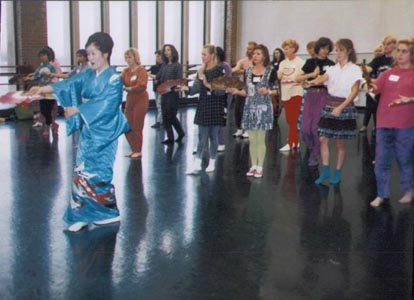
Minyo Dancing Workshop
(Japanese dance workshop, by Mary Ohno. source)
Mary Ohno of the Kabuki Academy will be teaching a workshop on minyo dance, folk dancing such as that done at Bon Odori.

When:
Wednesday, November 28th (6:30 - 8:30pm)

Where:
Japanese Cultural & Community Center of Washington
1414 S. Weller Street 
Seattle, WA 98144


Cost:
$15, $10 for JCCCW members, $5 for students
limited to 25 students, register here.

Monday, July 9, 2012

Obon Schedule

July 7th was Tanabata, and the Seattle/Tacoma Kimono Club had a great time celebrating tanabata wearing yukata at the Seattle Japanese Garden! I will post photos soon, but I wanted to post the local Obon schedule as soon as possible. The STKC is planning a meet-up at probably the Tacoma Bon Odori, however it anyone wishes to meet-up at the other Bon Odori festivals, let us know! The dates for each location are different, so at least one or more of us would be available to meet-up at the other festivals!

Obon is a joyous festival in Japan that celebrates ancestors and those who have past. Obon consists of a street festival, bon odori (dancing), and tōrō nagashi (floating of paper lanterns), and fireworks. People also clean and visit their family grave sites during obon season.

Seattle Bon Odori 2008, photo by Mizu Sugimura

Bon Odori is arguably the largest and most popular Japanese festival in the Seattle area. In our area, there are four Bon Odori festivals in the area, in Seattle, Tacoma, Auburn, and Olympia, and all of them fall on different days. Seattle is by far the largest of the Bon Odori festivals. Below are the schedules for Obon festivities in our area. I hope you can dress up in yukata and dance at one of our local Bon Odori festivals!


Bon Odori Dance Practice Schedule
Each of the three Buddhist temples that are holding Bon Odori are also holding dance practices for anyone who would like to learn the dance moves ahead of time. You do not need to go to the dance practices in order to dance at Bon Odori, however it helps you feel a little more confident if you plan to dance. The same dances are done at each of the 3 Bon Odori festivals, so you can go to which ever location is best for you, even if you plan to attend the actually Bon Odori at a different location.

Seattle Buddhist Church
1427 S Main St, Seattle, WA 98144
July 9-12th (Mon-Thurs) and the 16th & 17th (Mon-Tue), from 7:30-9pm 
Facebook discussion page

White River Buddhist Temple
3625 Auburn Way N, Auburn, WA 98002
7:30-9pm on the following dates in July:
9th (Mon), 11th (Wed), 13th (Fri), 16th (Mon), 18th (Wed)
Facebook discussion page

Tacoma Buddhist Temple
1717 Fawcett Ave, Tacoma, WA 98402
July 17-19th (Tue-Thurs) from 7:30-9pm
Facebook discussion page


Bon Odori Schedule

(source)

Seattle
July 21st (Sat), 4-10pm
July 22nd (Sun), 3-8pm

Seattle Buddhist Church
1427 S Main St, Seattle, WA 98144
Facebook discussion page

The largest of the local obon festivities. Main event is dancing in an oval around the street, around taiko drummers, and wearing yukata (though some people wear kimono and other wafuku, or regular clothing). Also there is food booths serving food made from scratch using the temple's very old recipes, kori shaved ice, beer/sake garden, martial arts, craft exhibits, and demonstrations.


White River (Auburn) Bon Odori 2010 (source)
Auburn
July 28th (Sat), 4-9:30pm
White River Buddhist Temple
3625 Auburn Way N, Auburn, WA 98002
Facebook discussion page

The White River Buddhist Temple has already released their set schedule for Bon Odori, I will list the schedule below. They will also have food booths serving: gyudon (beef bowl), Spam rice balls, cold somen noodles in broth, kori shaved ice, hot dogs, mochi, pies, and cold drinks. You can read their event flyer here.
  
4:00 - Beverage and kori booths open
4:30 - Food booths open
4:00 - Okinawa Kenjin-Kai group performance
5:15 - Children’s Lantern Parade
5:45 - Short opening service inside the temple
6:00 - Greetings and introductions
6:15 - Traditional odori dancing (until 9:30)
7:30 - Seattle Matsuri Taiko Drum group performance


(source)
Tacoma
August 4th (Sat), 5-9pm
Tacoma Buddhist Temple  
1717 Fawcett Ave, Tacoma, WA 98402
Facebook discussion page


Dancing, food, and drumming, similar to the other festivals. This festival will conclude with a candle lighting ceremony. If you would like to participate in the candle ceremony, you can find more information about it here.


(source)
Olympia
August 18th (Sat), 4-9pm
Water Street between Fifth Avenue and Legion Way, downtown Olympia, 98501
Facebook Discussion Page

They typically do this one on the second Saturday of August, however all of the city's websites are saying it is August 18th. It may help to confirm the date beforehand if you are going. (360) 791-3295
From 4-9pm, food booths open at 5pm, dancing begins at 7pm.


Tōrō Nagashi

Lantern floating ceremony,  tōrō nagashi often brings Obon festivities to a close, and often commemorates those lost in the bombing of Hiroshima. In Seattle, the tōrō nagashi, "From Hiroshima to Hope", is held every year at Green Lake, and you can make lanterns to honor loved ones who have past on or to honor victims of tragedy..

August 6th (Mon), 6-9:30pm
Green Lake Northwest Shore, South of the Bathhouse Theater Seattle, WA
6pm - Lantern making
8pm - Program (Blessing, speakers, taiko and shakuhachi music)
Dusk - Float lanterns on the lake

Seattle Tōrō Nagashi 2011 (source)

Monday, June 18, 2012

Tanabata, Star Festival

Yukata @ Seattle Tanabata 2011, (Source)
Next upcoming event is Tanabata, the Star Festival, July 7th (Saturday). Tanabata has a romantic story about Orihime and Hikoboshi being able to meet in the Milky Way for this one night of the year. Come celebrate Tanabata by dressing in yukata and decorating bamboo with paper ornaments and wishes!

Tanabata is held jointly by the Seattle Japanese Garden and the Wing Luke Museum, and there will be activities at both locations with a shuttle going between the two locations every half hour from 1-5:30pm.

Seattle Tanabata, 2008. (Source)

Links:
Seattle/Tacoma Kimono Club's Facebook Event listing
The Seattle Japanese Garden
Wing Luke Museum

Locations and admission info:
You only need to pay the admission fee for one location, and you can visit the second location for free. The admission fees and parking is different for each location, so I've provided that information below.

Wing Luke Museum
719 South King Street, Seattle, WA
Pay-parking, public parking map
Adult - $12.95
Senior - $9.95
Age 13 – 18 or with student ID - $9.95
Age 5 – 12 - $8.95
Under 5 - free

Seattle Japanese Garden
1075 Lake Washington Blvd. E, Seattle, WA
Parking lot is available.
Adults 18-64 - $6
Age 6–17, 65+, college students with ID, & disabled - $4
Under 9 - free

Event Schedule:
Celebration at The Wing Luke Museum:
10am-1pm: Crafts with P.A.P.E.R. and the Drachen Foundation.
10:30am and 11:30am: Storytelling performances by Eth-Noh-Tec.

Celebration at the Seattle Japanese Garden:
1-5pm: Japanese calligraphy wishes with Meito Shodo Kai
1pm, 2pm, and 3pm: Japanese tea ceremony (must purchase tea ticket in addition to admission).
2pm: Traditional dance by Fujima Dance Ensemble

A note about the tea ceremony. This is a 40 minute presentation in which visitors are guests of the ceremony, sitting on their knees, seiza style. Tickets are limited to 10 tickets per presentation. The 1pm presentation is sold out, but the the 2pm and 3pm presentations are currently open. Tickets are $5 and are non-refundable. If you would like to participate, call 206-684-4725 for reservations, or let me know if you would like to go as a group. I suggest the 3pm tea ceremony if you wish to watch the dance performances at 2pm. You do not have to wear formal kimono for the tea ceremony, you may wear a yukata or regular clothing, however they do request that you wear socks or tabi (bring them along with you if you are wearing yukata), and they also request that you don't wear jeans, rings, or fragrances.

Here is a video of the Seattle Tanabata in 2010. The video begins with scenes of the decorations on bamboo branches and the telling of the story of Tanabata. The emphasis of the video is on the tea ceremonies performed at the Seattle Japanese Garden during Tanabata.


The Fujima Dance Ensemble will perform this year at Tanabata. Dance performances are generally held at the moonviewing platform overlooking the pond. Here is a video of a dance performed at the gardens for Children's Day festivities.


 There are several decorations that are hung on bamboo branches during Tanabata, each representing a different kind of wish.
Seattle Tanabata, paper decorations. (Source)
The main decoration is tanzaku, rectangular strips of paper in which you can write a wish. There will be calligraphers at Tanabata to help writing wishes in Japanese.
Some examples of tanzaku wishes:
世界が平和でありますように。 (Sekai ga heiwa de arimasu you ni - I wish for world peace.)
今年も元気でいられますように。 (Kotoshi mo genki de iraremasu you ni - I wish to be healthy/energetic again this year.)
みんなの夢が叶えばいい。 (Minna no yume ga kanaeba ii - I hope everyone's dreams come true.)
Your wish can be anything you want, "I want to pass this test." "I want to become a doctor." "I wish my mom would stop embarrassing me in front of my friends." ~Whatever you wish!
Wikipedia has a good description of the other decorations and their meanings. Maybe some of use would like to make the paper kimonos called Kamigoromo, as a wish to improve at sewing!!

If you'd like to make more decorations yourself, here are some links for printing out decoration crafts.
Epson Web Japan
Tanzaku wish papers
Canon Papercrafts

Wednesday, May 30, 2012

1st Meet-up, Kimono Show

The Seattle/Tacoma Kimono Club is planning our first meet-up at the upcoming kimono show, The Tradition and Culture of Kimono.

Details Here

Our Facebook event listing can be found here.

Kimono master, Yu Ugawa will be demonstrating kimono and yukata dressing and preparation, and sharing the history and culture of kimono.

Registration is required. $20, $10 for students. Please register as soon as you can as tickets are expected to sell out. You can purchase your tickets here.

Wearing kimono to the show is NOT required, however, you may wear kimono or yukata if you wish to do so. This is a great opportunity to learn more about kimono from a master.


Friday, May 25, 2012

Chado, Tea Ceremony

If you've ever been to the Seattle Japanese Gardens, you may have seen the lovely tea house. I've been to the Seattle Japanese Gardens once, in 2010 on the same day as Aki Matsuri. The garden is beautiful, and the giant koi fish are amazing. There just happened to be a private memorial tea ceremony at the tea house in the gardens, however we could watch from fence. The seat of honor was taken by a framed picture of a man. It was touching to see, but I have to admit that I know nothing about tea ceremony.

Recently, the Seattle Japanese Garden's Community Blog shared an interview Naomi Takemura, the chief administrator of Chado Urasenke Tankokai Seattle Association, one of the two chado schools that do tea ceremony at the garden.

(Naomi Takemura. photo source)

You can read the interview with Naomi Takemura on the SJG's Community Blog. Tea ceremony is a fascinating part of Japanese culture. As I mentioned before, I personally don't know anything about tea ceremony, but I do find it appealing. Not just because of the association with kimono, but also because of its calming, meditative nature. Sometimes in the midst of an especially stressful day, I find myself wanting to disconnect and reflect in a serene environment.

Tea ceremony demonstrations are often presented at the many Japanese Culture events around Seattle, however it is different from experiencing tea ceremony in the Japanese gardens. If you would like to experience tea ceremony at the Seattle Japanese Gardens, I have listed the demonstration dates below. If you would like to see about getting a group together with the Seattle/Tacoma Kimono Club, let us know, either by commenting on this blog or on our Facebook group.

(Shoseian Tea House @ Seattle Japanese Garden. photo source)

Chado Presentations, by the Chado Urasenke Tankokai
These are 40 minute presentations in the Shoseian tea house, seated on tatami mats. Wearing kimono is not required, but they ask that you do not wear jeans, rings, fragrances, and you must wear socks. Reservations are required. Please call 206-684-4725 for reservations, or contact the kimono club either on this blog post or on Facebook if you would like to try and set up a club meet-up. The presentation dates link to the Kimono Club's Facebook event pages.
There are two presentations each day, at 1 and 2 pm.


Chado Demonstrations, by Urasenke Foundation Seattle
These demonstrations require no reservation, and is viewed from the patio at no charge. You can purchase a $5 ticket at the garden's gate if you would like to taste a bowl of tea and sweets. There is a limit of 20 tickets per demonstration.

There are two demonstrations each day, at 1 and 2pm.
June 16th, Saturday
July 21st, Saturday
August 18th, Saturday
September 15th, Saturday
October 20th, Saturday

(Ryokusuian Teahouse @ Seattle Art Museum. photo source)

Chado Demonstrations at the Seattle Asian Art Museum,
These demonstrations take place at the tea house of the third floor of SAM Downtown. The demonstration is free with museum admittance, seating is limited. You can register online, or you can contact the kimono club if you would like to try and set up a group meet-up.
June 21st, Thursday, 6:30-7:30pm, by Bonnie Mitchell of East-West Chanoyu Center
    registration link
July 15th, Sunday, 2:30-3:30pm, by Naomi Takemura of Chado Urasenke Tankokai
    registration link
July 19th, Thursday, 6:30-7:30pm, by Bonnie Mitchell of East-West Chanoyu Center
    registration link
September 16th, Sunday, 2:30-3:30pm, by Nobuko Iwamura of Chado Urasenke Tankokai
    registration link
September 20th, Thursday, 6:30-7:30pm, by Bonnie Mitchell of East-West Chanoyu Center
    registration link